


Frontiers in Organ Engineering: Human Organoids and the Bioartificial Kidney

Moderator
Bio
Miami Engineering Career Development
Associate Professor,
Department of Biomedical Engineering
University of Miami
Dr. Tomei is the Miami Engineering Career Development Associate Professor in Biomedical Engineering at the University of Miami. She obtained her M.S. in Materials Engineering from the Politecnico of Milan (Italy) in 2004, and her Ph.D. in Bioengineering and Biotechnology from the Ecole Polytechnique Fédérale de Lausanne (EPFL, Switzerland) in 2008. Dr. Tomei currently directs the Islet Immunoengineering Lab at the Diabetes Research Institute (DRI) where she is applying her unique background in bioengineering and immunology to develop novel immunoengineering platforms to prevent rejection after islet transplantation and to promote antigen-specific tolerance for a cure of type-1 diabetes.
Moderator
Bio
Professor of Otolaryngology, Mayo Clinic College of Medicine and Science
Chair, Department of Otolaryngology – Head and Neck Surgery/Audiology
Mayo Clinic, Phoenix, USA
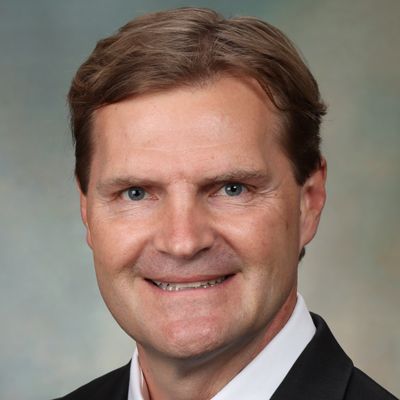
Dr. David G. Lott holds the academic rank of Professor of Otolaryngology at Mayo Clinic College of Medicine and Science. He serves as the Chair of the Department of Otolaryngology – Head and Neck Surgery/Audiology at Mayo Clinic Arizona. His practice includes voice and swallowing restoration, laryngeal cancer, and laryngotracheal reconstruction.
Dr. Lott received his M.D. degree at the University of Iowa Carver College of Medicine and completed a residency in Otolaryngology/Head and Neck Surgery at the Cleveland Clinic Head and Neck Institute. He received further fellowship training in Laryngeal Surgery and Professional Voice at Harvard Medical School/Massachusetts General Hospital.
Dr. Lott served as the Associate Director of the Mayo Clinic Center for Regenerative Biotherapeutics for 8 years. He is faculty for both the Clinical & Translational Science and Regenerative Sciences tracks within the Mayo Clinic Graduate School of Biomedical Sciences.
In addition, he is the Director of the Head and Neck Regenerative Medicine and Transplantation Program at Mayo Clinic. The primary goal of the program is to establish safe and effective clinical translation of regenerative medicine and transplantation technologies. The team is pioneering tissue-engineered technologies to create patient-specific 3D bioprinted implants for the larynx and trachea. Additionally, the efforts of this program have resulted in the world’s first total larynx transplant in the setting of active cancer.
Throughout his career Dr. Lott has received many awards and honors, including being named in the Top Voice Doctors in America by Billboard Magazine. He received the Mayo Clinic Transform the Practice Award and has been honored with the Mayo Clinic Teacher of the Year Award. Most notably, he is a Mayo Clinic Distinguished Clinician, the highest honor given for clinical excellence.
Dr. Lott is involved with both national and international organizations and is an active member of the American Academy of Otolaryngology/Head and Neck Surgery, Triological Society, American Bronchoesophageal Society, American Laryngological Society, and the International Bronchoesophagological Society.

Moderator
Bio
Associate Professor of Medicine, Washington University
St Louis, MO, United States
Rohan Paul, MD, is a transplant nephrologist and Associate Professor of Medicine at Washington University School of Medicine. His research applies single-cell and spatial transcriptomics to delayed graft function, kidney allograft injury, tubular stress responses, immune–epithelial interactions, and kidney–lung crosstalk. His work spans human transplantation and experimental kidney injury and has been presented at ASN Kidney Week and the American Transplant Congress. He also leads patient-safety and quality-improvement initiatives supported by the American Association of Kidney Patients.

Speaker
Bio
Professor-Researcher: Departments of Bioengineering & Therapeutic Sciences and Surgery
UCSF Schools of Pharmacy and Medicine
Director: Biodesign Laboratory at UCSF Mission Bay
Technical Director: The Kidney Project
San Francisco, CA, USA
Dr. Roy is a translational bioengineer dedicated to the development of biomedical devices to address unmet clinical needs. He is the director of the Biodesign Laboratory, a Professor for the Department of Bioengineering and Therapeutic Sciences. His research focuses on fabrication of silicon membranes, surface modification of MEMS substrates to enhance biocompatibility, and wireless sensors for physiological monitoring. He is the technical director of The Kidney Project, a national research project to create a surgically implanted, and free-standing bioartificial kidney. He has a PhD in electrical engineering and computer science from Case Western Reserve University in Cleveland, Ohio

Speaker
Bio
Professor of Molecular Genetics:
Emeritus/Distinguished Professor, Utrecht University and
the University Medical Center Utrecht
Head of Pharma Research and Early Development
Member of the Enlarged Corporate Executive Committee of F.Hoffmann-La Roche Ltd , in Basel Switzerland
Hans Clevers obtained his MD degree in 1984 and his PhD degree in 1985 from the University Utrecht, the Netherlands. His postdoctoral work (1986-1989) was done with Cox Terhorst at the Dana-Farber Cancer Institute of the Harvard University, Boston, USA. From 1991-2002 Hans Clevers was Professor in Immunology at the University Utrecht and, since 2002, Professor in Molecular Genetics. From 2002-2012 he was director of the Hubrecht Institute in Utrecht. From 2012-2015 he was President of the Royal Netherlands Academy of Arts and Sciences (KNAW). From June 2015-2019 he was director Research of the Princess Máxima Center for pediatric oncology. As of March 18th, 2022 Hans Clevers is the Head of Pharma Research and Early Development and a Member of the Enlarged Corporate Executive Committee of F.Hoffmann-La Roche Ltd , in Basel Switzerland.
Use the image below to promote this event (right-click to download)

Contact
Address
Cell Transplant and Regenerative Medicine Society
c/o The Transplantation Society
740 Notre-Dame Ouest
Suite 1245
Montréal, QC, H3C 3X6
Canada